Main text goes here to engage people

Recent Posts

What’s for Breakfast?


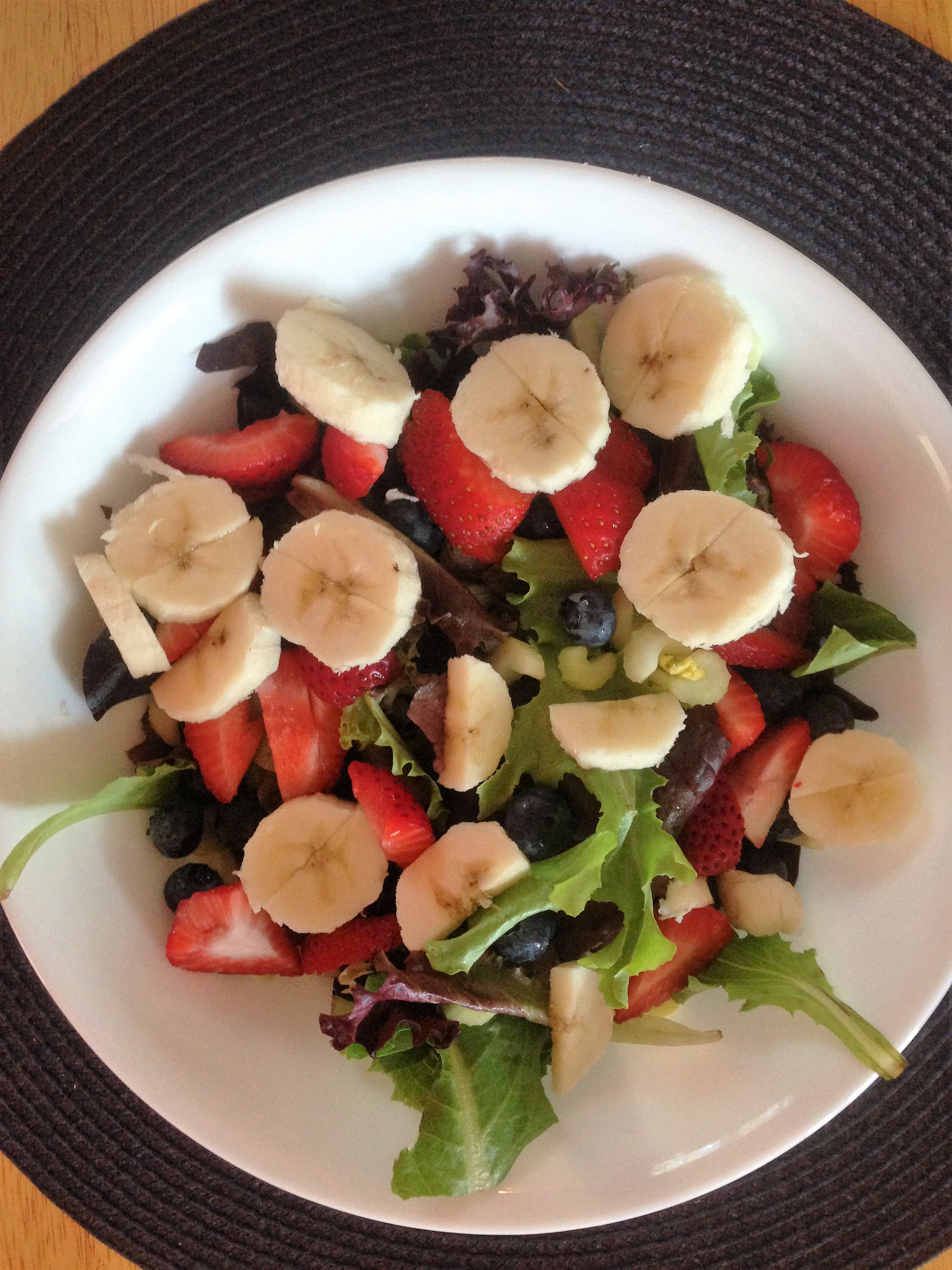
IMG_3676

When we first started with the Plant Paradox program, green smoothies were recommended and they were easy to prepare.  The beauty of making them is that you can combine whatever ingredients you have on hand, and there is so much variety to the various greens available.  (We did add a little fruit and compliant sweetener after the 3 day cleanse period, which I think added a lot to the flavor.)  But after a while–well, let’s be honest.  It gets boring to eat the same thing every day.  Especially when you’re just DRINKING … and there’s no real chewing!

When Ed’s weight had fallen more than we were comfortable with, I decided it might not be a bad idea to add a little more fruit than what Dr. Gundry originally recommended.  So I put together the salad you see above.  Simple, yet healthy ingredients.  I used:

Spring mix

strawberries

blueberries

sliced banana

chopped celery

chopped walnuts (optional)

1-2 Tbsp. extra virgin olive oil

Great for breakfast, lunch, or a nice light dinner! You can easily add some grilled chicken or shrimp if desired.

Enjoy!

Beyond Whole 30


In a previous blog, I mentioned the health benefits Ed realized from being on the Whole 30 program.  A side effect of that was that he also lost weight.  Fifteen pounds of it.  The funniest part of that is that he really didn’t NEED to lose weight.  (I can hear all you women out there cursing him.  I felt the same way.  He was eating everything I prepared, (and then some), and continued to loose weight.)  I did reintroduce a few foods after the initial 30 days, but he didn’t.  He was feeling so good, he didn’t want to take any chances of any ailments returning.  It’s not like I went crazy in returning to my old eating habits, I guess my downfall was that “occasional” cheat.  I know there are a lot of you out there who can relate.  I think it comes down to the fact that getting healthy is about a lifestyle, NOT a DIET.

My weight did slowly fall, especially when I started to add a few days of weight training and cardio to my routine.  I spoke to a trainer who emphasized that it is necessary to do both–monitor your food intake and exercise–to develop a healthy body inside and out. To date, I’ve lost about 9 pounds, and it feels great.  To get better toned, I need to get more serious about visiting the gym.  (Don’t we all?)

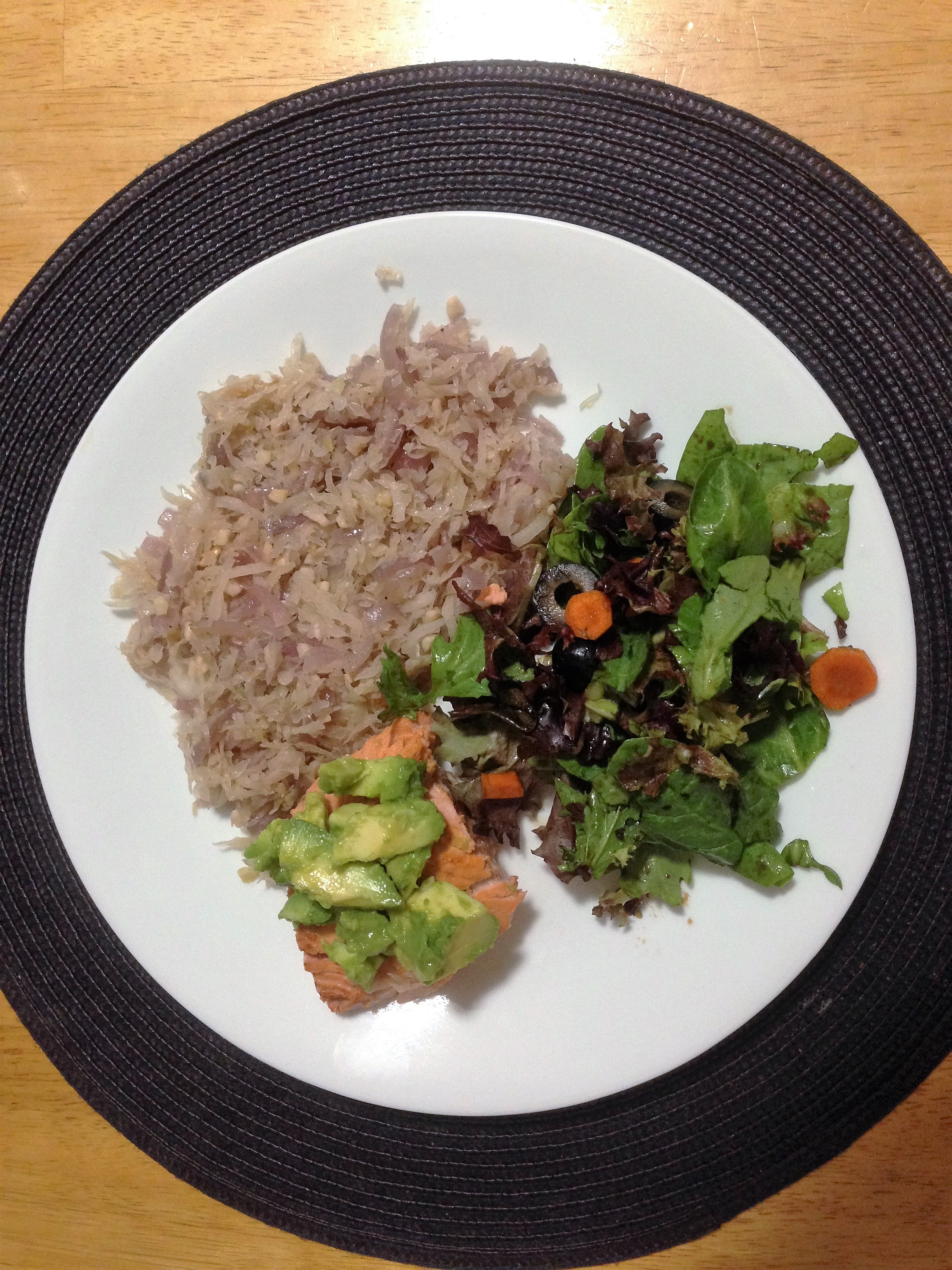
We are now in Phase 3 of the Plant Paradox program, and will be experimenting with adding pressure-cooked legumes and/or beans very gradually.  Since I’ll be taking off for Boston for a couple of days, those new dishes will have to wait for my return.  In the meantime, the wonderful dish in the photo attached makes a great side dish for you to try.

Sautéed Purple Cabbage, Kale, and Carrots (for 2)

2 Tbsp coconut oil

1 red onion, chopped fine

1 Tbsp chopped garlic

1/2 tsp ginger powder (optional)

small head of purple cabbage, shredded

1/2 bunch kale, torn up into bite sized pieces (remove thick stems)

3 carrots, peeled and cut in 1/2 inch circles

salt & pepper to taste

Sauté the onion first in the coconut oil, and as it becomes translucent, add the garlic and ginger.  Stir for a couple of minutes then add the remaining ingredients.  Cook till just tender.  Season with salt & pepper.

Enjoy!


Sautéed Cabbage and Onion, with Salmon and Avocado


This recipe is an adaptation of Dr. Steven Gundry’s Cabbage-Kale Sauté with Salmon and Avocado.  It is also Whole 30 compliant!

IMG_3682

For 2 People:

1 Tbsp olive oil

6 oz. wild-caught salmon

1 avocado, diced

3 Tbsp lemon juice

salt & pepper to taste

4 Tbsp coconut oil

1 red onion, chopped

1 Tbsp chopped garlic

3 cups shredded cabbage

Preheat oven to 350 degrees.  Brush salmon with the olive oil and bake for 15-20 minutes.

While the salmon is baking, put the avocado in a small bowl, toss with half the lemon juice and a little salt.  Set aside.

In a large skillet, heat 4 Tbsp. of coconut oil and sauté the onion and garlic till onion is translucent. Add the cabbage and sauté till tender.  Season with salt and pepper.

After the salmon is cooked, place  a 3 oz. portion on each plate, squeeze remainder of the lemon juice over each fillet, and top with the reserved avocado.  (You can either place the salmon on top of the cabbage mixture or serve it on the side–Which is what I did in the photo.)

You can also make a small side salad to round out the meal.

Enjoy!

Out on the Town (in NY)


IMG_3208

Over the weekend, Ed and I went to NY to attend the Affiliate Summit East 2017.  It was an amazing event.  I heard someone mention that there were about 12,000 people in attendance.  Overall it was very educational, and extremely well organized.  Being new to blogging, and it’s potential, we wanted to learn more about affiliate marketing and what it has to offer.

We met a lot of great people blogging their way to blogging heaven.  Many have been blogging for a number of years, and naturally they’ve developed a large following.  We had a chance to listen to John Chow, who interviewed a panel of successful bloggers who make an incredible living blogging. A few suggestions I took away from their talk in particular were:

  1. Build an audience before you try to monetize it.
  2. Send out a reader’s census to find out what people want to read about.
  3. If you want to get a blogger interested in your site–retweet, share, or comment on their blog to show (genuine) interest.
  4. Learn more about the blogger you’re focused on contacting.
  5. The best time to contact a fellow blogger is 5:30 to 6:30 AM.
  6. To capture your audience’s email address, offer an e book regarding info from your content.

There were many great speakers at the Summit.  I will share additional info in the blogs to come, but just wanted to tell a funny story about something that happened while at the event.  It just goes to show that no matter how well you try to plan everything, things don’t always go as planned.

To stay on our eating program (The Plant Paradox), I dehydrated various meats and veggies and packed them in a small lunch bag, along with water and various snacks that were compliant.  As we were checking in, we had to have our photos taken for our badges.  Since I had my handbag, the lunch bag, and the special “event bag” they gave us across my shoulders, I decided to put them down for the photograph.  We had to walk from one booth to another to register, and somewhere along the way, I left the lunch bag behind.  A couple of hours later, we were ready for lunch……  but no lunch bag.

We returned to where we “thought” we left it, and it wasn’t there.  We talked to the people at the hotel where the Summit was being held, and they said if anyone found it, it would be at least 2 hours before they’d have it in the office.  I checked with the event staff at various locations, but nothing could be done for a while.  Instead of going hungry, we sought a local restaurant and requested a simple salad for me (without the items that were not compliant) and a shrimp sandwich (with gluten free bread) for Ed.  No one got sick, so that was good.

Later in the day, I decided to check with the Summit organizers again.  (I was determined to find that bag!)  Before I had a chance to call them, I noticed there was a message on my phone.  Believe it or not, the registration desk called me to say they had my lunch bag!  Needless to say, we were thrilled to have a truly compliant dinner that evening!

What are lectins, anyway???


According to Dr. Gundry, lectins are large proteins found in animals and plants. For plants, it is their way of protecting themselves from being eaten by animals. (And gluten is actually a form of lectin.) Lectins are found in the seeds, grains, skin, rinds, and leaves of most plants. When an animal or insect eats a plant containing lectins, it either dies, or gets sick, which is intended to discourage the insect or animal from eating it again. (This is how the plant and it’s offspring protect themselves in order to survive.)
When humans eat foods that contain lectins, oftentimes they too will feel unwell–some people more than others. (That’s when we tend to reach for stomach relief medications.) Unfortunately, the animals most of us eat are fed the same plants that affect us, and indirectly, their problems become our problems when we eat those animals. So as Dr. Gundry says, “You really are what you eat.”
In addition to the affect of our diet, there are 7 major disruptors which are responsible for changing your gut microbes. According to Dr. Gundry, they are:
1. Broad-spectrum antibiotics.
2. NSAIDs.
3. Stomach-Acid blockers.
4. Artificial sweeteners.
5. Endocrine Disruptors–which are low-dose estrogen-like products people put on their skin, such as cosmetics, preservatives, sunscreen and the use of plastics.
6. GMO foods and Roundup.
7. Exposure to Blue spectrum light.
All of this exposure to lectins and other disruptors, Dr. Gundry believes are what has led to the various problems with our immune systems, including:
Aching joints, heartburn, age spots, skin tags, arthritis, cancer, dementia, fibromyalgia, IBS, skin rashes, and a whole host of other health problems.
Reading this long list is what made me think this eating program was just the thing we needed to try to repair the damage we’ve both experienced over the years.

PS:  The photo above is a Green Smoothie, which has NO LECTINS.  It is made with spring mix, spinach, kale, avocado, mint, and lemon juice with water.  Yummy!!

Why WeGutHealthy


The previous posts explained the progression from where we were to where we are now.  Somewhere along the way, I stumbled upon a YouTube video by Dr. Steven Gundry.  His focus is on gut health.  There has been a lot of buzz regarding gut health, and discoveries are being made everyday.  In my mind, Dr. Gundry seemed to be on to something.  Since the things we had done up to now were helping, Dr. Gundry’s Plant Paradox program seemed worth trying.  (Hence, the moniker, weguthealthy!)

In Phase 1 of the program, you start with a 3-day cleanse.  It seems people everywhere have started drinking “green smoothies!”  In Dr. Gundry’s program, fruit is actually off limits, especially for the first 3 days, except for the fresh squeezed lemon juice in his recipe.  You can also add a few drops of Stevia extract if you like.  Initially, I avoided even a few drops, since I didn’t want to duplicate any “sweet” taste that might make me crave more sweets!  Basically you can add various types of lettuces, greens, avocados, with a bit of fresh mint to a mixture of water and ice.  For a bit of plant protein, I added hemp powder.

Many people use other plant proteins, (such as pea) as well as whey proteins.   Dr. Gundry suggests that if you use them, read your labels carefully, because many whey proteins contain sugars and/or artificial sweeteners.  But in reality, he actually discourages using whey protein because it elevates insulin-like growth factor (IFG) which he says stimulates cancer and aging.  (Neither of which I want to encourage!)

The program recommends you drink a “Green Smoothie” for breakfast for each day of the 3-day cleanse.  Lunch and dinner for the first 3 days consist of a lot of cruciferous vegetables with no more than 4 oz of grass-fed meat, wild-caught fish or pastured chicken.  (There should only be a total of 8 oz. of animal protein a day.)  Vegetables should be organic and locally sourced if possible.  There are vegan and vegetarian substitutions as well.

In the days that follow, I will post photos of some of the meals I’ve made, and explain any modifications I made to the recipes.  If you’ve already heard of the program and have had experiences (or recipes) you’d like to share, I’d be happy to hear about them!   If you have any questions, please don’t hesitate to ask.  Although I’m not a licensed nutritionist,  I want to share my experiences with others in the hope I can offer whatever advice and encouragement I can.